
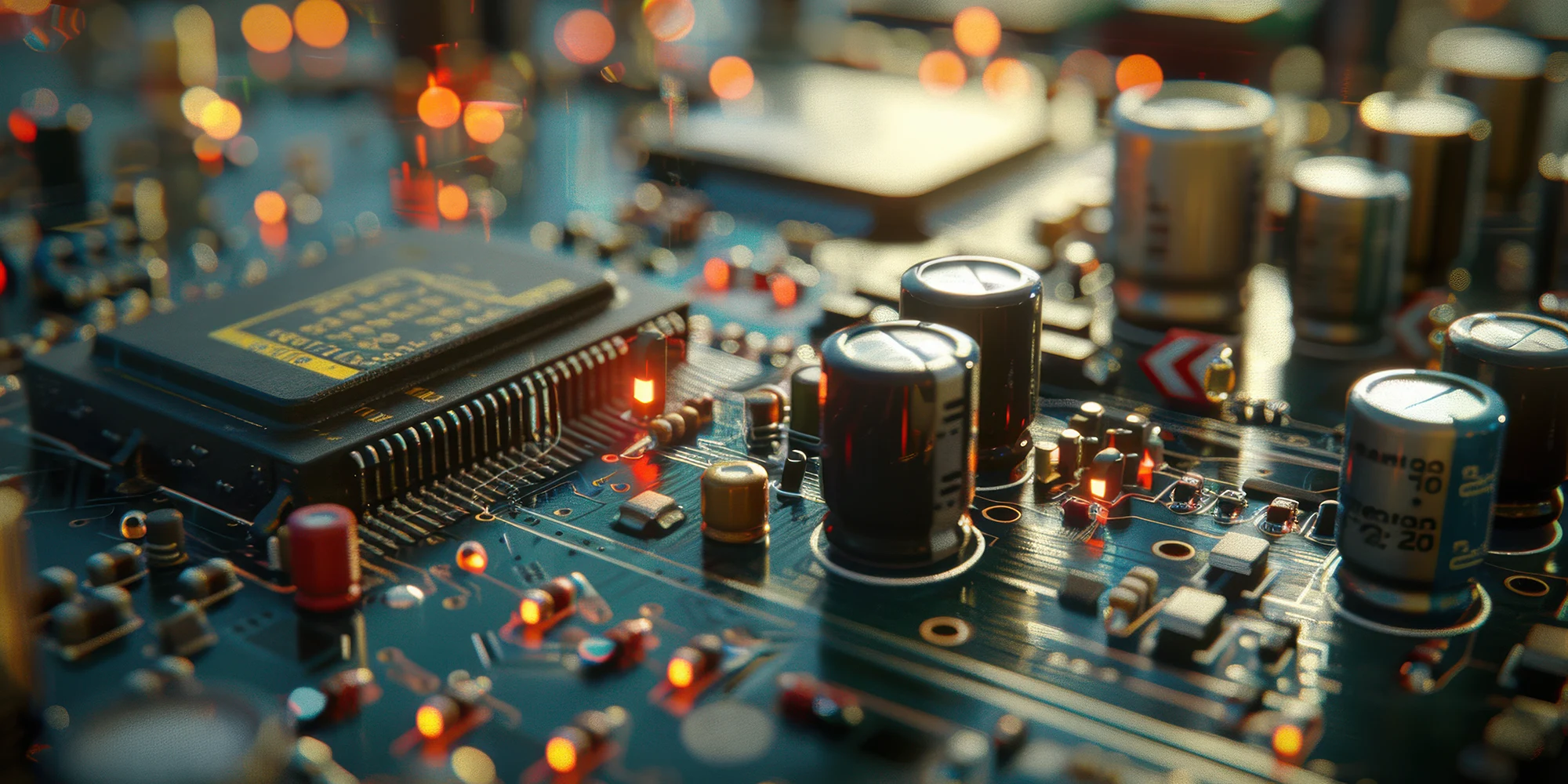
Selecting the right electronic components for projects is one of the most important steps in building a reliable circuit. Every component, whether an IC, resistor, capacitor, inductor, or connector, plays an important role.
When chosen wisely, your circuit becomes stable, efficient, and long-lasting. But with thousands of component variations available in the market, it can be confusing to pick the right part.
This guide breaks down how each component works, what to look for in datasheets, mistakes to avoid, and how to source parts from trustworthy suppliers.
Understanding the Role of Each Component in a Circuit
When selecting components for circuits, it’s important to understand what each part does and how it affects the overall design. Choosing the right component can improve performance, reliability, and longevity.
What ICs do in a circuit and when to use them
Integrated Circuits (ICs) are compact modules that perform multiple functions, such as amplification, logic operations, signal processing, or voltage regulation. Use ICs when you need to reduce circuit size, simplify wiring, or achieve specific functionalities like timers, microcontrollers, or communication interfaces.
Resistors — controlling current flow and voltage drop
Resistors limit current flow and create voltage drops in a circuit; they are essential for protecting components, setting biasing conditions, and dividing voltages.
Capacitors — energy storage, filtering, and stabilising voltage
Capacitors store and release electrical energy. They are commonly used for filtering, smoothing voltage fluctuations, decoupling, and providing short-term energy bursts in power circuits.
Inductors — electromagnetic applications and power circuits
Inductors build a magnetic field to store energy whenever current moves through their coils. They are often found in power supplies, filters, transformers, and circuits where electromagnetic energy management is required.
Connectors — enabling secure and reliable signal/data transfer
Connectors allow components or devices to interface reliably. Choosing the right type provides stable data transmission and reduces the risk of loose connections or signal loss.
Key Factors to Consider When Selecting Components
When making electronic component selection, keep several critical factors in mind to avoid performance or safety issues.
Voltage and current ratings
Components must handle the expected voltage and current without overheating or failing.
Operating temperature and environmental conditions
Consider the temperature range, humidity, and exposure to dust or chemicals. Industrial or outdoor applications may need more robust specifications.
Component tolerance and failure rate
Check the tolerance values, which indicate allowable deviation from the nominal rating. Low failure rates improve reliability over time.
Package type (SMD vs Through-hole)
Surface-mount devices (SMD) are compact and ideal for automated production, while through-hole components provide stronger mechanical connections and are easier to handle manually.
Compatibility with PCB design and layout
Make sure the components fit the physical space and layout of your PCB. Incorrect sizing can cause assembly challenges and performance issues.
How to Read Datasheets Correctly
Learning to interpret datasheets for electronic components is essential for selecting the right part for your design.
Key specifications to check before ordering
Look at voltage, current, power ratings, tolerance, and recommended operating conditions.
Electrical characteristics graphs and protection ratings
Understand curves showing current vs voltage, thermal performance, and protection limits to predict real-world behaviour.
Mechanical dimensions and footprint diagrams
Verify the component size, pin layout, and mounting style to match your PCB design.
Common Mistakes to Avoid During Component Selection
Avoid these frequent errors when choosing components:
Choosing based only on price
Cheaper parts may save money initially, but can lead to failures or shorter lifespans.
Ignoring certification and quality standards
Certified parts meet safety and quality standards, reducing the risk of malfunctions.
Underestimating power dissipation and heat management
Components must handle heat properly. Neglecting this can lead to overheating and damage.
Forgetting to verify component availability and lead time
Unavailable components can delay projects. Check stock levels and sourcing timelines before finalising your design.
Sourcing Components — Ensuring Reliability and Quality
Reliable sourcing is as important as selecting the right components.
Why choose authorised distributors and reliable suppliers
Working with trusted suppliers helps reduce counterfeit risks and supports consistent quality throughout your project.
Detecting counterfeit electronic components
Check for proper labelling, batch numbers, and supplier documentation. Counterfeit parts can compromise safety and performance.
Importance of RoHS, REACH, and ISO compliance
Compliance with global standards ensures environmentally safe and reliable components.
Benefits of BOM consolidation and kitting services
BOM consolidation streamlines ordering and reduces errors, while kitting services provide ready-to-use component sets for efficient assembly.
Final Checklist Before Finalising Your Component List
For proper electronic component selection, review the following:
Electrical and mechanical compatibility
Confirm that all parts work within the voltage, current, and mechanical constraints of your design.
Lifecycle status (new, active, end-of-life, obsolete)
Avoid obsolete components unless you have a reliable source.
Stock availability and long-term procurement planning
Plan to prevent shortages in future production runs.
Cost vs quality vs risk evaluation
Balance price, quality, and reliability to meet project requirements without compromising performance.
Conclusion
Choosing the right electronic components for projects involves more than picking parts from a catalogue. Understanding their roles, checking datasheets, avoiding common mistakes, and sourcing from trusted suppliers all contribute to reliable, high-performing circuits.
Thoughtful component selection helps reduce failures, maintain project timelines, and optimise costs, making sure your electronics function as intended.
For reliable sourcing of ICs, resistors, capacitors, connectors, and more, contact Spark Electronics, trusted electronic component suppliers delivering quality parts across India with verified authenticity.
FAQs
1. What is the most important factor when selecting electronic components?
Matching voltage, current, and environmental specifications to your design is the key.
2. How can I read and understand a component datasheet?
Focus on electrical ratings, mechanical dimensions, graphs, and operating conditions to provide compatibility.
3. How can I avoid buying counterfeit electronic components?
Purchase only from authorised distributors and verify batch numbers, labelling, and certificates.
4. Why are certification standards important when purchasing components?
Standards like RoHS, REACH, and ISO compliance guarantee safety, quality, and reliability.
5. Should I choose SMD or through-hole components?
SMD suits automated, compact designs, while through-hole is easier to handle manually and offers stronger connections.