
Resistors: Types, How to Select and Applications
Regardless of their appearance, resistors play a major role when it comes to electronic circuits. From protecting components to shaping signals, resistors ensure that the devices deliver optimal performance. However, to achieve the exact results with your electronic devices, it is important to select the correct resistor.
This blog takes you through the various types of resistors, how to select the right applications, and the easy mistakes you can avoid while buying a resistor.
What Are Resistors and Why Do They Matter in Circuits
In electronics, the importance of resistors is highly significant. From enabling power supply through a circuit to maintaining stable operations, the simple components that work behind it all are referred to as resistors.
Their functionalities include 3 key aspects: protect the electronic parts, maintain stable performance, and promote high-end performance. Let’s unpack each of these:
Basic function of resistors
The fundamental function of a resistor is to control the flow of electric current to components to prevent damage, maintain the power supply, and ensure stable operations. It supports circuit resistance to ensure that the appropriate power reaches the sensitive electronic components for safe and efficient operation.
How resistors control current and voltage
If you are a physics enthusiast, you must have heard of the term Ohm’s Law. This is the principle followed by resistors to regulate the current and voltage as needed. Upon choosing the correct resistance value, it becomes easier to adjust the circuit, which protects the devices from high electrical overload.
Common circuit scenarios where resistors are essential
The importance of resistors can be seen in several critical circuit scenarios, such as preventing burnout in LED circuits, generating specific reference voltages, dividing networks for transistors, and timing or filtering circuits. They also support signal conditioning, security management, and control electronic system functions.
Types of Resistors
There are various types of resistors, in various shapes and sizes, each of which is designed to meet specific mechanical, electrical, and environmental requirements.
SMD resistors
Also known as Surface Mounted Device resistors, SMD resistors are compact components designed for automated PCB assembly. They support reliability, tolerance, and stable performance in consumer electronics, devices, and industrial systems. As one of the top quality resistors, SMD resistors help save space on printed circuit boards.
Through-hole resistors
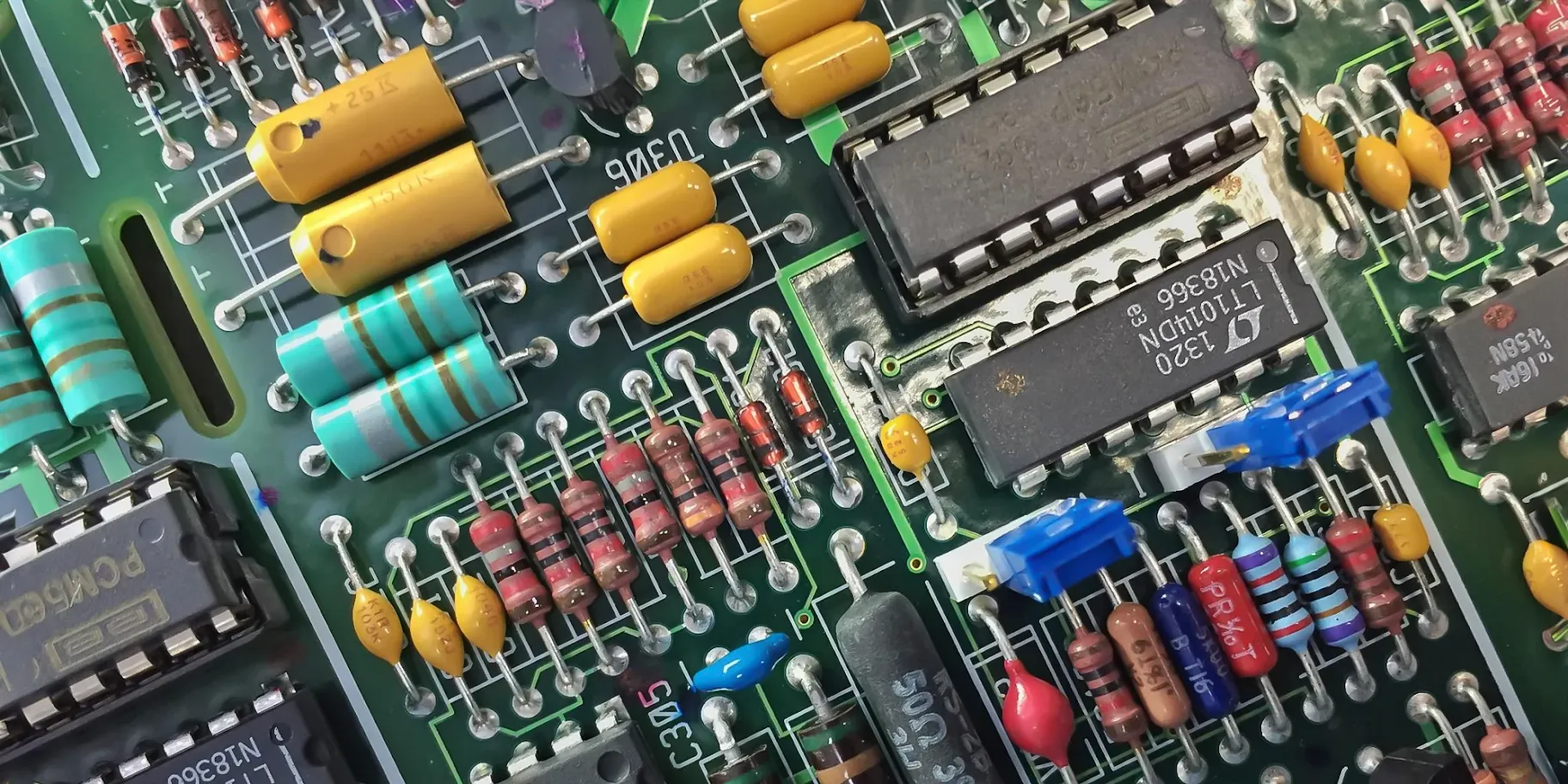
These types of resistors come with metal wire leads that go through holes in the PCB (printed circuit boards) and are soldered on the other side. They offer strong stability and are suitable for prototyping, high-vibration environments, and in devices that require high durability, performance efficiency, and power ratings.
Carbon film, metal film, wire-wound, and other resistor variants
Carbon film resistors support general-purpose value, whereas metal film resistors offer top precision and low noise. Wire-wound resistors, on the other hand, are for high-power loads. Resistors made of thick film and metal oxide address specific temperature, tolerance, and reliability requirements.
Fixed vs variable resistors
Fixed resistors provide a constant or fixed value that helps predict circuit behavior. Variable resistors can be used manually or even automatically adjusted. Examples include rheostats, trimmers, and potentiometers, which support calibration, tuning, signal control, and user-level adjustments across electronic systems.
How to Select the Right Resistor
With several options to choose from, resistor selection comes with various factors to consider. This is mandatory as it ensures that your circuit is safe and reliable.
Here’s what you need to take into account:
Determining resistance value based on Ohm’s Law
The Ohm’s Law formula (V = IR) is commonly used to measure the required resistance for your circuit needs. Accordingly, you can control the current flow and protect the electronic components. The correct value must be selected to maintain signal stability and circuit operation with full safety.
Matching voltage/current requirements
The resistor must effectively manage the current and voltage supply while preventing overheating throughout. For this, you need to check the power rating to determine the resistor capacity for your application. Select the resistor with a safe range to avoid power failure and improve overall circuit reliability.
Considering environmental and thermal factors
Apart from overheating due to increased power overload, environmental factors such as heat, humidity, etc, also need to be considered as per your application. Hence, look for resistors with temperature settings, tolerance, and stability to meet these conditions. This allows the resistor to function accurately without failure in humid environments.
Availability, compliance, and long-term sourcing
Look for widely available resistor models that are compliant with industry standards and made by trusted manufacturers. This supports easy accessibility, ensures consistent quality, promotes easy maintenance, and scalability for your applications in the long term.
Applications of Resistors in Electronics
From managing voltage to shaping signals, resistors are known to support a variety of electronic functions. Hence, it is important to understand the resistor applications in depth, which allow designers to build stable, compliant, reliable, and accurate electronic systems across industrial equipment, consumer devices, and embedded applications.
Voltage division and current limiting
Resistors help create voltage dividers that generate precise reference voltages for sensors and circuits. They help control the current flow, protecting components such as integrated circuits, LEDs, and so on. Thus, voltage division and current control make resistors safe and reliable for use.
Filtering and timing circuits
In the case of a resistor-capacitor or RC network, the resistor works with capacitors to create filters for frequencies and timings to effectively control the speed and shape of electrical circuits. By controlling signal frequency, shaping waveforms, and setting delays, resistors become a crucial part of digital and analog circuits.
Pull-up and pull-down resistor use cases
The pull-up and pull-down resistors ensure that the microcontroller or logic pin is set at a stable high or low state, which helps prevent noise from causing false triggers and enables reliable digital switching in buttons, communication lines, and control interfaces.
Biasing in amplifiers and signal conditioning
Resistors help set the right operating point (bias) for transistors and amplifiers. With appropriate biasing, there is stable gain, low distortion, and accurate signal processing. They also support level shifting, impedance control, and help shape analog signals in precision across electronic systems.
Common Mistakes When Choosing Resistors
While there are several resistors to choose from, overlooking certain aspects may result in making the wrong choice that can impact the overall performance of your applications.
Below are some of the common mistakes made when choosing resistors which you can avoid:
Selecting an incorrect power rating
A resistor must be able to safely handle the heat generated as current passes through. This is because a resistor with low power rating can potentially damage the device due to overheating. Make sure to calculate the expected power and select the resistor that is suitable for the operation conditions.
Ignoring tolerance in precision circuits
Do not miss out to check the tolerance level in precision circuits as it measures how a resistor’s actual value differs from the labelled value. In case of precision circuits such as sensors, amplifiers, or timing paths, the small variations have an impact as well. Upon ignoring tolerance, there is increased possibility of drifts, inaccurate readings, and more.
Choosing based only on cost
Resistors that are cheap may not always offer a stable performance, accurate readings, or come with long-term reliability. Furthermore, this may result in less durability and even safety. Hence, it is ideal to select a resistor that meets industry standards and is within your budget range to avoid compromising on resistor performance.
Using the wrong package for the environment
With various types of resistor packages available, each package is designed to meet different environment conditions. For example, a small SMD part may be unable to handle a high vibration or high temperature environment, resulting in early failure. It is important to ensure that the package aligns with the operating conditions for durable and dependable performance.
Conclusion
While resistors are simple components, their significance in the performance of electronic circuits is undeniable. With a clear understanding of their types, functionalities, applications, including certain smart measures you can take to avoid selecting the wrong resistor.
With the right resistor in place, be it for voltage control, safety, stability, or creating timing, you can rest assured of performance consistency and long-term reliability. This also makes it easier to build the project with the right component selection and maintenance.
FAQs
1. Which resistor is better for high-power applications?
The wire-round resistors are considered ideal due to their ability to handle higher heat and power safely
2. What does resistor tolerance mean?
Resistor tolerance allows you to measure the resistor’s actual resistance from the printed value.
3. Can I replace a through-hole resistor with an SMD resistor?
Yes, however, the SMD resistor needs to have the same value, power rating, and meets the circuit’s design needs.
4. Which type of resistor is best for precision circuits?
For precision circuits, metal film resistors are preferred as they provide high accuracy and come with low noise.
5. Why is power rating important when selecting a resistor?
Power rating is important as it helps determine how much heat can be handled by a resistor without failure and at safety.